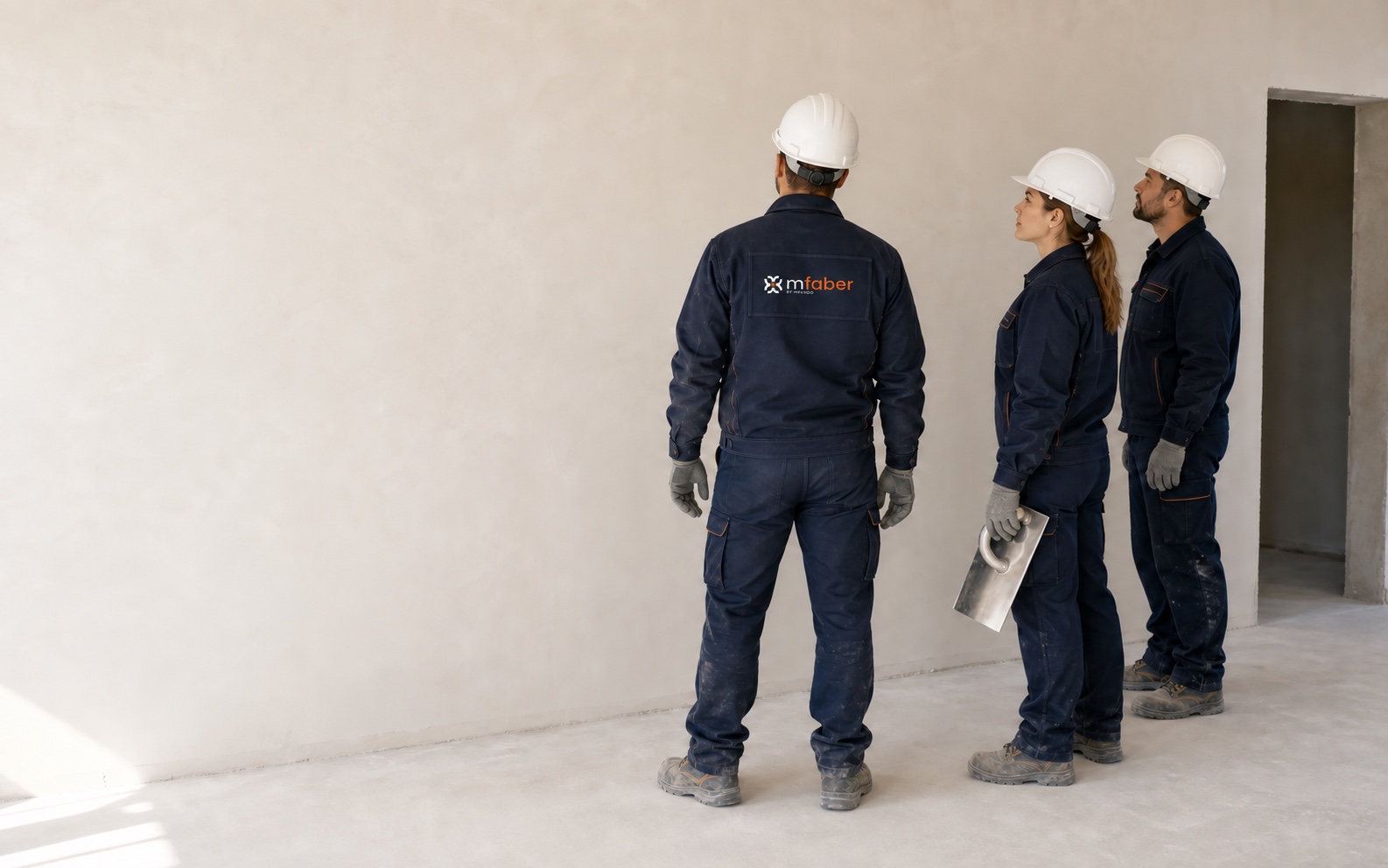
Choose the finish, then define the work
Plastering, plasterboard lining and decorating solve different parts of the same job. Tell us whether you need an existing surface repaired, a new partition or ceiling installed, or a completed surface prepared and painted. The required appearance and the condition behind the finish help determine the right scope.
For board work, the proposal should identify the lining system, insulation where specified, joint treatment and final decorative finish. Electrical alterations, plumbing, removal of existing finishes and making good adjacent areas are included only when stated in the agreed package. This makes it easier to compare quotations and coordinate your own trades.
A material schedule that matches the finished result
A useful supply enquiry lists more than the main board or paint. A dry lining schedule can include the specified boards, profiles, fixings, insulation, tapes, jointing materials, beads and finishing products. For painting, identify the substrate, preparation, primer, finish, colour, coats and intended use. We can help clarify missing information before the scope is agreed.
Product substitutions are checked against the required system and supporting documents. A similar name, thickness or colour does not establish equivalent performance. Availability, delivery, unloading and any separate installation responsibilities are confirmed in the proposal; the nearest source is selected only when it is suitable for the requirement.
Specify what the room needs to do
A partition or ceiling does more than carry its final finish. Tell us whether the brief concerns privacy, echo, equipment access, moisture exposure or fixing furniture to a wall. These requirements help define the assembly and its interfaces before materials are ordered or work starts.
Drawings should identify openings, access panels, service routes and any planned loads. Where performance is specified, the proposal should refer to the appropriate system information and define who is responsible for design, installation checks and acceptance. A component description or attractive finish alone does not establish the performance of the completed assembly.
Questions before you decide
Can drywall, plastering and painting be combined?
They can be scoped together or separately. Specify the partition or ceiling build-up, finish, primer and paint coats. Where fire, moisture or acoustic performance is required, the relevant design specification and product documents must be assessed. For the painting package, identify the rooms and surfaces, repairs to retained finishes, colour and sheen, protection and cleaning. A preparation allowance should distinguish joint treatment from full-surface finishing and removal of unsuitable existing coatings. Where appropriate, agree a trial area and inspect it under the intended lighting before approving the finish. Record inspection points, outstanding items and the treatment of additional remedial work in the proposal, so that supply, application and handover can be compared on the same basis.
For a specified fire or acoustic performance, review the complete assembly and its supporting evidence, including boards, framing, insulation, fixings, joints and relevant service openings. Changing one component or detail can affect the system; performance is not established by a board label alone.
Can MFABER provide labour if I supply the materials?
A labour-only package can be assessed. Share the product specifications, quantities and delivery arrangements. Preparation, accessories, protection, suitability and responsibility for the finished work are agreed before the quotation is accepted. For painting, send the exact product, colour reference, sheen and technical sheet or packaging details, including the primer, fillers and other materials already available. We review compatibility with the substrate and other layers, container condition and storage information before agreeing the work; a brand name alone does not define a coating system. The proposal identifies missing consumables, responsibility for shortages or delayed deliveries, and approval of substitutions. Product responsibilities for customer-supplied materials and the workmanship warranty are recorded separately in the written terms.
Practical answers before you decide
Does paint and primer in one remove every need for a separate primer?
Not necessarily. Check the exact coating instructions against the surface and its condition. Porous areas, stains or adhesion problems may need additional preparation or a separate primer. The proposal should name the preparation, any primer and the finish coats required for your surfaces; the wording on a paint container is not a complete project specification.
Can MFABER supply materials without installation?
Yes. Request supply only, supply and installation, or a defined subcontract package. Identify specification, quantity, delivery point, unloading needs and timing. Product availability and suitability are confirmed against the project requirements.
How should I compare two quotations?
Compare specification, quantities, brand or approved equivalent, surface preparation, labor, delivery, installation and handoff on the same basis. Review exclusions and warranty terms as well as price. A square-metre figure without an agreed specification can hide important differences.
How are samples, delivery and site readiness handled?
Agree sample approval before procurement, then confirm the delivery location, access, unloading and storage arrangements. The work sequence should account for dimensions and substrate readiness. Product documentation is identified for the chosen materials; a certification is stated only when it applies to that product.
What happens at completion?
The agreed checks and any outstanding items are recorded with the handoff information. Keep product references, care guidance and warranty documents. For a later concern, contact info@mpandoglobal.com with the project reference so that the product or workmanship issue can be assessed.
Where relevant to the agreed package, the handover should also identify the installed system, approved revisions, access provisions and inspection records. The required documents and the party responsible for each are agreed in the scope; a general product brochure does not certify the completed installation.
How long does the warranty last?
The duration depends on the product, installation or service. Ask for the applicable written terms with your proposal; the covered scope, start date, conditions and claim route should be clear before you order. A single duration is not applied to every product or project.
Should I request supply only, supply and installation, or a subcontract package?
Choose supply only when your team controls installation. For supply and installation, identify preparation, fixing, finishing and handoff responsibilities. A subcontract package also needs drawings, quantities, interfaces with other trades and acceptance criteria. MFABER can assess these options against the same specification so the comparison is meaningful.
Can materials be replaced with an equivalent product?
An alternative should be reviewed against the required dimensions, appearance, performance and supporting product documents. Confirm compatibility with the whole assembly and the effect on price, schedule and warranty. Record approval before purchase or production; a similar color or product name alone does not establish equivalence.
For coatings, compare the actual product and variant, substrate, primer, application conditions and time before the intended use. General brand advice and a specific technical sheet may have different limits; resolve the applicable instructions before approving an alternative.
How should work in an occupied home, office or shop be planned?
Describe operating hours, access, noise and dust restrictions, storage space and areas that must remain usable. Agree sequencing, protection, deliveries, waste removal and the interfaces with other trades. Confirm any building-management requirements in the brief. Working hours and completion dates are established for the actual site conditions.
Record the route from delivery to the work area, any unloading assistance, temporary storage, access restrictions and which areas can return to use at each stage. A coating that feels dry may still have use restrictions, so the hand-back sequence must follow the selected system.
What information helps with a warranty or workmanship inquiry?
Contact info@mpandoglobal.com with the quotation or project reference, product identification, relevant delivery or installation date, photographs and a description of the issue. Product and workmanship responsibilities are assessed against the written scope and applicable terms. MPANDO GLOBAL Inc. stands behind its products and work; coverage and duration depend on the particular supply or service.
What is the difference between a skim finish and tape-and-joint finishing?
A skim finish applies a thin plaster layer over the prepared surface. Tape-and-joint finishing treats the board joints and fixing positions as part of a specified board-finishing system. The appropriate option depends on the board, required appearance, lighting, intended decoration and programme. The quotation should name the finish and describe the preparation needed before painting.
Can an existing wall or ceiling be repaired instead of completely replaced?
A repair can be assessed alongside wider renewal. Send photographs, the approximate affected area and any known history of leaks, movement or previous repairs. The condition and cause of the damage must be understood before choosing a finish. The proposed scope should identify removal, local repair, adjoining surfaces and redecoration so that the expected result is clear.
When can newly plastered or jointed surfaces be painted?
There is no single waiting period that suits every plaster, jointing material and site. The surface must be ready for the selected primer and paint system, taking account of residual moisture, thickness, ventilation and site conditions. The agreed programme should distinguish completion of the plastering work from readiness for decoration. Follow the current instructions for the products actually specified.
How is the amount of paint for my project calculated?
Start with the area to be coated and the specified coats, then use the selected product's coverage information for the actual surface and application method. Texture, absorption, repairs, colour changes and application losses can affect the quantity. Primer and finish quantities should be shown separately where applicable. A coverage figure for one coat is not the amount needed for a complete painting system.
When can a painted floor be used again?
Touch-dry, ready for another coat, suitable for foot traffic and ready for its intended service are different milestones. The selected coating, substrate, conditions and expected loading determine the hand-back plan. Tell us whether the area will carry people, vehicles, equipment or cleaning operations. We agree the relevant restrictions and acceptance points for the specified system rather than applying a single drying time to every floor.
How can I check the colour and finish before ordering?
A screen image or printed colour card is a starting point. Where appropriate, agree a physical sample or trial area on the intended surface and review the dry finish under the relevant lighting. Record the product, colour reference, sheen and approved sample. Batch consistency, touch-up needs and the amount to order can then be considered before procurement; sample availability is confirmed for the selected product.
For a hand-applied decorative plaster, also review the pattern of movement across a larger sample: a small colour swatch may not show the finished effect. Agree the sample background, finishing method and any acceptable natural variation, then retain the approved reference for the work.
Check whether a sample represents appearance only or is suitable as the final coating. A colour sample may have a different sheen or performance from the product being ordered. Record the final coating reference as well as the approved colour, and assess any trial area using that specified finish. Sample approval alone does not establish durability or suitability for every surface.
Can painting solve a damp patch or repeated peeling?
A new coating should not be used to hide an unresolved cause. Leaks, trapped moisture, contamination, weak previous layers or an incompatible coating may require investigation and preparation before decoration. Share the history and photographs so the assessment can identify what needs to be addressed. The quotation should distinguish remedial work from the final decorative coating.
Can you assess an older textured wall or ceiling before refinishing it?
Yes, the existing surface and proposed work can be reviewed before a finishing scope is agreed. Unknown older coatings should not be scraped, sanded or drilled on the assumption that they are harmless. Where hazardous materials may be present, a competent assessment and the appropriate local procedures are needed first. Any specialist removal scope and the responsible contractor must be confirmed separately before work begins.
Is reducing echo the same as stopping noise between rooms?
No. Echo within a room and sound passing into another room are different requirements. An absorbent ceiling treatment and a separating wall address different parts of an acoustic brief. Describe the disturbance, the spaces involved and any specified performance target. The complete design, junctions and installation need assessment; a decorative acoustic finish is not a universal soundproofing solution.
Can cupboards, shelves or equipment be fixed to a new partition?
Tell us what will be fixed, its position and the intended loading before the partition is designed or closed. The specified backing, framing and fixing arrangement must suit the complete wall and the item being supported. Do not assume that any plasterboard wall can carry the same load or that a fixing chosen afterwards will preserve the required system performance.
How will maintenance access above a ceiling be provided?
Identify the services that need access and their locations before agreeing the ceiling layout. An accessible ceiling and a continuous plasterboard finish with specified access panels are different arrangements. Panel dimensions, appearance, opening clearance and any required fire or acoustic performance should be included in the design and quotation. Later access changes need review before cutting the finished ceiling.
Can a lime or traditional plaster repair be matched by colour alone?
Colour is only one part of a suitable repair. The existing material, background, condition, texture and intended finish also matter. For an uncertain or sensitive surface, the project may require specialist assessment or material analysis before a specification is selected. A sample can help agree appearance, but it does not by itself prove compatibility or repair the cause of deterioration.
For a decorative detail, agree the profile and the transition to retained work as well as the surface texture. Record which investigation, stabilisation or replacement, finish matching and decoration are included; a photograph alone cannot establish an exact match.
What happens if service routes or openings change after the quotation?
Record the revised drawings and identify the affected partition, ceiling or finish before work proceeds. Responsibility for the opening, supporting details, sealing, making good and any required inspection must be agreed. A change may affect quantities, performance, cost or programme. Approval should be recorded rather than assuming that every alteration is included in the original package.
Does a delivery date include an exact time slot and carrying materials inside?
These are separate arrangements. Confirm the delivery address, vehicle access, unloading method, receiving person and whether internal carrying or lifting is included. A planned delivery day does not automatically reserve an exact slot, a crane or upper-floor handling. MFABER confirms the practical arrangement for the selected supply route and the actual site before dispatch.
For phased deliveries, agree the quantities and dates for each stage, where materials can be stored and who checks their condition on arrival. Any tracking or timed delivery service is confirmed separately in the proposal.
Should plasterboard be bonded directly to a wall or fixed to a frame?
The choice depends on the existing wall, its condition, the finished dimensions and the space needed for services or insulation. Send photographs, drawings and any specified performance requirements. MFABER can assess the supply and installation scope against the selected lining system; direct bonding and framed lining should not be treated as interchangeable options.
How do stairs, lifts and narrow entrances affect board delivery and installation?
The route into the building can affect practical board sizes, handling and the installation sequence. Include entrance and lift dimensions, stair turns, floor level and any access restrictions in the enquiry. We confirm unloading, internal movement and storage responsibilities in the proposal. Splitting or changing a specified board arrangement also needs a technical check rather than an on-site assumption.
Is moisture-resistant plasterboard a complete waterproofing solution?
A moisture-resistant board does not, by itself, establish that a wall or shower area is waterproof. The agreed build-up should identify the substrate, any waterproofing system, joints, penetrations and the final finish. Tell us whether the area experiences occasional humidity or direct water exposure so the relevant materials and trade responsibilities can be assessed together.
How is a coating chosen for a floor exposed to wear, water or chemicals?
Start with the substrate and its condition, existing coatings, expected traffic and the liquids or cleaning products it will encounter. Required slip performance, appearance and time available before use should also be stated. We use the selected system information to clarify preparation, layers and application conditions in the proposal; a generic description such as floor paint does not confirm every performance requirement.
Is a render additive the same as a ready-to-apply plaster or render?
No. An additive may form one part of a specified mix, while a prepared plaster or render is a different product format with its own instructions. Tell us the background, exposure, intended finish and any specified system. The quotation should identify the exact material type and compatible components, without assuming that one additive can replace a complete waterproofing or rendering system.
Can work start if the room is not dry or the application conditions are unsuitable?
Application conditions must be checked for the actual material and system. Surface condition, temperature, humidity and ventilation can change the installation or decorating programme. If the agreed conditions are not available, the next step is to review site readiness and the sequence of work before proceeding. The product instructions and proposal should explain any relevant limits rather than using one rule for every material.
Can a veneer plaster finish go over the drywall already installed?
It depends on the specified plaster system and the existing surface. Some veneer systems require a dedicated plaster base with controlled absorption; ordinary drywall or an existing painted surface is not automatically equivalent. Send the board reference, finish history and photos. The proposed preparation and compatible materials should be checked against the selected manufacturer’s instructions before work is agreed.
How should I compare one-coat and two-coat veneer plaster proposals?
Compare the specified system and finished result, rather than the coat count alone. Ask each proposal to identify the base, plaster products, preparation, intended texture, sample approval and any finish coating. Application conditions and follow-on work also affect scheduling. A product from a different system should not be substituted solely because its name or appearance seems similar.
Can a decorative plaster finish be used in a shower?
A decorative appearance does not establish suitability for direct water exposure. The proposed finish needs to be assessed with the background, waterproofing, junctions, cleaning regime and the manufacturer’s requirements for that use. State whether the area is a shower enclosure, a splash zone or a drier wall. Product selection and application responsibilities must be confirmed for the complete build-up.
What aftercare should be agreed for a decorative plaster finish?
Ask for care instructions for the selected finish, including any protective treatment, cleaning limits and the process for assessing damage. Confirm whether future maintenance or renewal of a protective layer is needed, and who is responsible. Keep the sample reference and product information with the handover record; advice for another plaster or coating may not apply.
What if a product page and its technical data sheet give different instructions?
Check the exact product reference and the date or revision of each document. Do not combine instructions from different products or editions. Send MFABER the links or documents you have, together with the intended surface and use. We clarify conflicting information with the relevant supplier or manufacturer before agreeing the coating, application sequence and conditions in the proposal. A short sales description does not replace the instructions for the specified product.
What quantity should a quotation state for tinted paint?
Record the product, base, colour reference, finish and the supplied quantity for each container. Container size, base volume and the final tinted quantity may be described differently, so confirm the unit and actual quantity used in the offer. Compare coverage for the specified number of coats and application method, with primer shown separately where needed. MFABER confirms the selected product and packaging in the proposal rather than assuming every colour uses an identical fill quantity.
Warranty and aftercare
We stand behind every product we supply and every service we deliver. All supplied products and services are backed by warranty commitments for the agreed scope. Coverage, duration, conditions and the remedy process vary by product and work and are set out in the quotation, contract or applicable warranty document.
Product warranty and installation workmanship are assessed separately against the supplied item and agreed work package. Keep the product reference, approved specification and relevant delivery or installation records. Any inspection, remedy or additional support follows the applicable written terms. Statutory rights remain unaffected.
For warranty or aftercare assistance, email info@mpandoglobal.com with the project or order reference, product or service, delivery date and a description of the issue. Add relevant photographs or screenshots without passwords or unrelated personal data. We review the information, clarify any inspection needed and coordinate the appropriate next step under the applicable terms.
info@mpandoglobal.com